

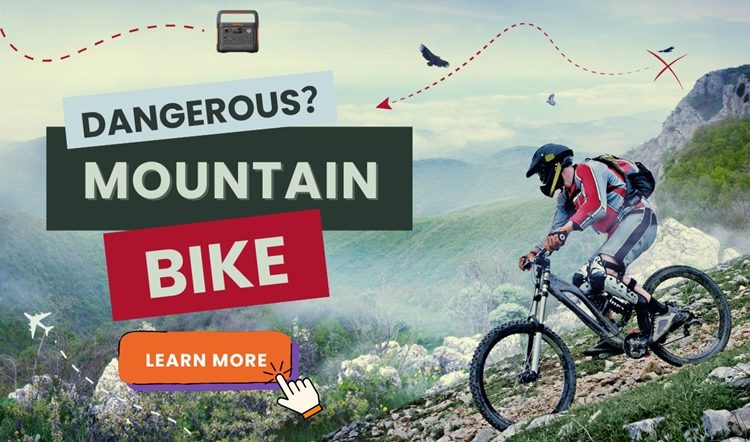
There’s nothing quite like the rush of mountain biking—the wind in your face, the rugged trails under your tyres, and the breathtaking landscapes of the UK unfolding around you. From the wild, untamed beauty of Scotland to the dramatic peaks of the Cairngorms, these trails offer some of the best cycling holidays for adrenaline seekers and nature lovers alike.
But with such thrilling terrain comes a burning question: Is Mountain biking dangerous?
Like any adventure sport, it carries risks, but with the right preparation—proper gear, trail knowledge, and even essentials like a reliable battery generator for longer remote trips, riders can enjoy the excitement while staying safe. Whether you’re a seasoned rider or a curious beginner, understanding the risks and rewards is key to making the most of your mountain biking experience.
Truth & Facts About the Risks of Mountain Biking?
Mountain biking is an exhilarating sport, but like any high-energy activity, it comes with its share of risks. Understanding these dangers, backed by research and real-world data, helps riders make informed decisions and stay safe on the trails.
Statistics & Studies: How Dangerous Is Mountain Biking?
Research shows that mountain biking carries a moderate injury risk compared to other sports.
A study published in the British Journal of Sports Medicine found that injury rates in mountain biking are lower than in contact sports like rugby or football but higher than in casual cycling.
Another report from the Healthy Sport Index suggests that while accidents happen, most are preventable with proper precautions.
Interestingly, a separate study noted that cross-country riders (who tackle endurance-based trails) experience fewer injuries than downhill or freeride bikers, who take on more technical and high-speed terrain. This highlights how risk levels can vary depending on riding style and trail difficulty.
Risk Factors: What Makes Mountain Biking Dangerous?
While mountain biking’s thrill is part of its appeal, certain factors can heighten the risk of accidents or injuries. Understanding these variables helps riders make smarter choices on the trail—whether they’re exploring the rugged Highlands of Scotland, tackling the steep descents of the Cairngorms, or enjoying a cycling holiday on gentler routes.
Trail Difficulty: Downhill vs. Cross-Country
Not all mountain biking is equally risky. Downhill riding, with its high speeds, jumps, and technical obstacles, naturally carries a greater chance of crashes than cross-country (XC) biking, which focuses on endurance over varied terrain.
- Downhill/Enduro: Higher speeds and steep drops increase the risk of severe falls. Protective gear (full-face helmets, knee pads, and body armour) is essential.
- Cross-Country: Less extreme but still demanding, with risks like fatigue-related mistakes or sudden trail hazards (roots, rocks).
Weather Conditions: The UK’s Unpredictable Climate
The UK’s famously changeable weather—especially in Scotland, where trails can turn slick with rain—adds another layer of risk. Wet rocks, muddy paths, and loose gravel significantly increase slipping hazards.
Bike Setup & Maintenance: Avoiding Mechanical Failures
A poorly maintained bike is an accident waiting to happen. Common issues include:
- Brake failure (worn pads or leaking fluid).
- Suspension problems (reduced control on rough trails).
- Incorrect bike sizing: An ill-fitting frame affects handling and stability. (Wondering, “What size mountain bike do I need?” A proper fit ensures better control. Consult a bike shop for measurements based on height and riding style.)
Regular checks (tyre pressure, chain lubrication, bolt tightness) and pre-ride inspections can prevent most mechanical mishaps.
Common Injuries: What to Watch For
Most mountain biking injuries result from falls, collisions, or overexertion. Some of the most frequent issues include:
- Cuts & abrasions – From sliding on rough terrain.
- Fractures (wrist, collarbone, ankle) – Often due to awkward landings.
- Concussions & head injuries – A key reason why helmets are non-negotiable.
- Sprains & muscle strains – Typically from sudden twists or heavy impacts.
While these risks exist, the majority of injuries are minor and treatable, especially when riders wear protective gear and ride within their skill level. The next section will explore how to minimise these dangers while still enjoying the thrill of mountain biking in Scotland, the Cairngorms, and beyond.
How to Stay Safe While Mountain Biking
Mountain biking doesn’t have to be dangerous. Whether you’re navigating the forested trails of the Cairngorms or planning a cycling holiday in the Scottish Highlands, following key safety practices can mean the difference between an epic ride and an avoidable accident.
Gear Up Properly
The right equipment is your first line of defence:
- Helmet – A must, ideally with MIPS technology to reduce rotational impact. For downhill, consider a full-face helmet.
- Knee & Elbow Pads – Essential for technical trails where falls are more likely.
- Gloves – Improve grip and protect hands in a crash.
- High-Visibility Clothing – The UK’s often gloomy weather calls for bright or reflective gear, especially in autumn/winter.
- Eye Protection – Sunglasses or clear lenses shield against mud, bugs, and branches.
Bike Maintenance Checks
A well-tuned bike prevents mechanical failures:
- Brakes – Test before every ride; replace worn pads and check hydraulic fluid.
- tyre Pressure – Adjust based on terrain (lower for grip on rocky trails, higher for speed).
- Suspension – Ensure it’s properly set for your weight and riding style.
- Chain & Drivetrain – Keep lubricated and check for wear.
A quick pre-ride checklist (ABCs: Air, Brakes, Chain) takes minutes but could save a crash.
Ride Within Your Skill Level
Scotland’s trails range from gentle forest paths to extreme downhill routes—know your limits.
Start on beginner-friendly trails like those at Glentress to build confidence before attempting technical terrain. If a section looks too challenging, there’s no shame in walking it. Progress gradually, practising obstacles at slow speeds first.
Plan & Prepare
The UK’s unpredictable weather and remote trails demand preparation. Always check the forecast, as rain drastically changes trail conditions.
Carry navigation tools like GPS or offline maps, especially in vast areas like the Cairngorms. Pack essentials: a first aid kit, repair tools, extra food and water, and a power bank to keep devices charged on longer rides.
Will a Portable Power Station Benefit Mountain Biking?
Mountain biking in the UK’s wild landscapes often means leaving power outlets far behind.
While you don’t need a portable power station for a quick day ride, longer trips, e-bike excursions, or basecamp setups can benefit from reliable off-grid energy. That’s where the Jackery Explorer 240 v2 comes in—but is it the right fit for your ride?
This 6.6 lb (3 kg) unit isn’t designed to be carried on your ride, but it excels in specific scenarios. For car-supported trips or basecamp setups, it’s perfect for keeping phones, GPS devices, and cameras charged between rides.
Its 256Wh capacity can power a smartphone up to 17 times or a laptop 4 times, and when paired with solar panels, it becomes a sustainable energy source for multi-day adventures.
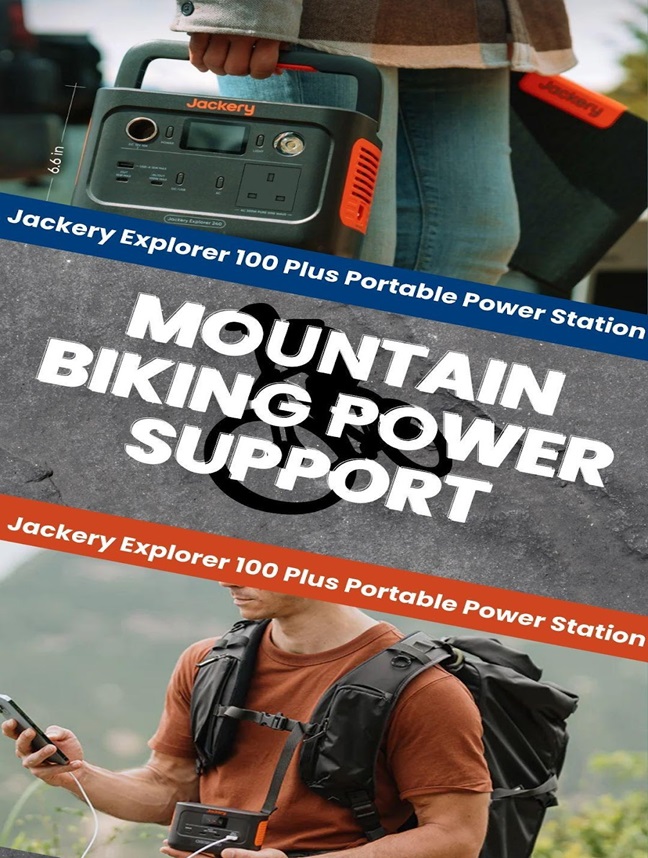
However, it’s important to recognise its limitations. The Jackery 240 v2 is a little bit bulky for carrying during actual riding – it’s best left at basecamp or in your vehicle. For minimalist bikepacking or single-day rides, a compact power bank, like the Jackery Explorer 100 Plus Portable Power Station, will serve you better.
Already Prepared? Where to Start?
Whether you’re planning a cycling holiday or just looking for your next adventure, these world-class destinations should be on your radar.
Scotland’s Epic Trails
No mountain biking bucket list is complete without Scotland’s legendary landscapes. The Tweed Valley, home to Glentress, is a must-visit for riders of all levels, with its perfectly sculpted trails and bike park vibe. For those craving next-level thrills, Fort William delivers heart-pounding downhill tracks that have hosted World Cup races—just be ready for steep, technical terrain that demands skill and courage.
Cairngorms National Park
If remote, rugged wilderness calls to you, the Cairngorms deliver in spades. This vast national park offers everything from flowing singletrack to challenging backcountry routes, often with breathtaking Highland views as your reward. These trails are best suited for experienced riders, as the terrain can be unforgiving—but that’s all part of the adventure.
Wales’ Thrilling Trail Centres
Wales punches well above its weight when it comes to world-class riding. Coed y Brenin in Snowdonia is a trailblazer (literally—it was the UK’s first purpose-built trail centre) with routes for every ability. Meanwhile, BikePark Wales near Merthyr Tydfil offers gravity-fueled fun with professionally built downhill and enduro trails.
England’s Hidden Gems
Don’t overlook England’s diverse offerings. The Lake District boasts natural, rocky trails with stunning scenery, while Dalby Forest in North Yorkshire provides a mix of family-friendly greens and leg-burning black routes. For a unique coastal ride, the South Downs Way mixes rolling hills with seaside views.
Mountain Biking – Calculated Risks, Unforgettable Rewards
Ultimately, the question isn’t really “Is mountain biking dangerous?” but rather “How can I ride smarter?” The answer lies in respecting the trails while embracing the challenge. Because when you crest that Highland ridge at sunset or nail a technical descent you’ve been working up to, every calculated risk becomes worth it.
Ready to explore? Last thing least, prepare a power station portable and trail recommendations to plan your next two-wheeled adventure.