

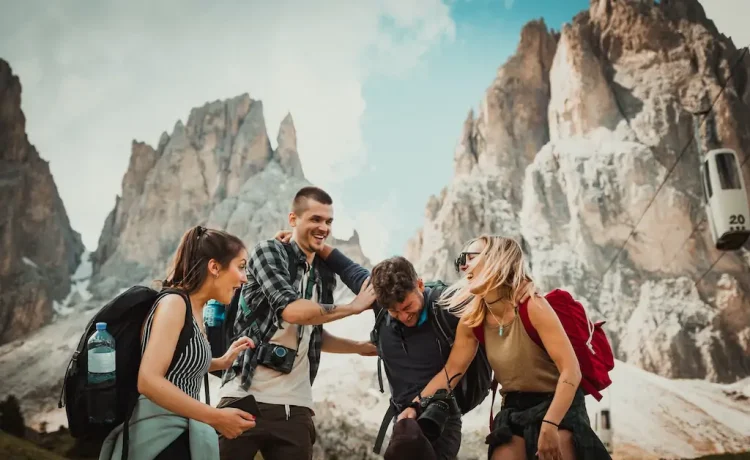
Travel, in its purest form, is not just about places—it’s about people. And more often than not, it’s the conversations we have while traveling that stay with us long after the passport is tucked away and the suitcase unpacked. These exchanges—some brief and lighthearted, others profound and perspective-shifting—are what give travel its human edge. “Travel talk” is more than idle chatter; it’s the dialogue between cultures, the shared laughter over unfamiliar dishes, the questions asked in broken languages, and the stories exchanged between strangers who may never meet again.
In a world increasingly dominated by screens and digital noise, these organic, face-to-face moments hold a unique magic. They remind us that beneath all our differences lies a common thread of curiosity, humor, empathy, and experience. Let’s delve into the nature of travel talk—the conversations we have while exploring—and how they shape not only our understanding of the world, but our understanding of ourselves.
The Beauty of Spontaneous Encounters
Some of the most memorable conversations on the road happen when we least expect them. A seatmate on a long-haul flight, a street vendor offering local insight, or a fellow traveler waiting in line at a border crossing—each interaction has the potential to become a meaningful exchange.
Why these moments matter:
-
They offer unfiltered perspectives: Locals speak from lived experience, not curated tourist brochures
-
They ground us in the present: A real-time conversation demands attention and engagement
-
They spark serendipity: A passing remark might lead to a recommendation, an invitation, or even a new friendship
The spontaneity of these moments is part of what makes them so powerful. They exist outside of our plans and itineraries, showing us that the world is not just to be seen, but to be heard.
Speaking the Local Language—Even If Poorly
You don’t need fluency to connect. Even a few sincere attempts at the local language can open doors, elicit smiles, and soften cultural divides. “Travel talk” often begins with simple greetings, awkward grammar, and lots of gesturing—but its impact is profound.
Why trying matters:
-
It demonstrates respect and humility
-
It breaks the ice and lowers defenses
-
It often leads to warm responses and extra help
Learning to say “hello,” “thank you,” or “how much?” in a new language may seem small, but it’s a gesture that carries weight. It shows that you’ve stepped out of your own comfort zone in an effort to connect with someone else’s world.
Listening as an Act of Travel
While speaking is often celebrated, listening is equally important in travel dialogue. To listen—truly listen—to someone from another culture is to temporarily step into their shoes. It is to understand, even for a moment, how they view life, history, community, and even the traveler before them.
Practicing travel listening:
-
Ask open-ended questions: “What do you love most about your town?” or “What’s something visitors often misunderstand?”
-
Resist the urge to compare immediately: Let their perspective breathe before inserting your own
-
Listen with curiosity, not judgment
Through listening, you become not just a tourist, but a student of the world.
Storytelling as a Universal Language
In every culture, storytelling is a shared tradition. Around dinner tables, campfires, market stalls, and temple steps, people tell stories. Travel talk often takes the shape of narratives—funny misadventures, family histories, legends passed down through generations.
How stories shape travel:
-
They humanize history and politics: A war becomes more than a headline when you hear it from someone who lived through it
-
They offer emotional connection: Laughter, awe, sadness—these emotions cross language barriers
-
They stay with you long after the journey ends
When you listen to someone’s story—or share your own—you engage in an age-old act of cultural exchange that transcends time zones and borders.
Travel Talk with Fellow Travelers
While locals offer cultural depth, conversations with fellow travelers offer camaraderie. Whether it’s a shared hostel dorm, a trek through remote hills, or a midnight bus ride across a country you can’t pronounce, these connections are a vital part of the journey.
What fellow travelers offer:
-
Fresh perspectives from different parts of the globe
-
Tips, insights, and practical advice gained just days earlier
-
Shared understanding of the joys and frustrations of travel
Often, these chats are brief but vivid—a few hours of laughter in a bar in Lisbon, a philosophical conversation on a boat in Thailand. Yet they remind us that we are part of a global community of wanderers.
The Etiquette of Cross-Cultural Conversations
Of course, engaging in meaningful travel talk requires sensitivity. What may be a casual topic in your culture could be taboo in another. Knowing how to navigate these waters with grace is part of being a responsible traveler.
Key principles:
-
Avoid assumptions or generalizations
-
Be mindful of tone and body language
-
Stay open-minded, especially when faced with unfamiliar beliefs or customs
When in doubt, approach every conversation with respect and curiosity. It’s not about having all the right words—it’s about the intention behind them.
Conversations That Change You
Certain travel conversations stay with you forever. Perhaps it was a café owner in Morocco who spoke about the importance of family, or a taxi driver in Buenos Aires who shared his dreams of visiting Italy. These moments plant seeds of understanding, reshape our worldview, and often, teach us more than any guidebook ever could.
What makes a conversation transformative:
-
It challenges a previously held belief
-
It inspires a new goal or perspective
-
It creates a sense of global kinship
In this way, travel becomes not just movement through space, but evolution through interaction.
Final Thought: The World as a Conversation
To travel well is to engage with the world not just visually, but vocally and emotionally. “Travel talk” is more than speaking—it’s a conversation with culture, with strangers, with self. It’s how we bridge oceans and build empathy. It’s how we remember that despite the languages we speak or the passports we hold, we’re all just people—hungry for connection, for understanding, for stories.
So wherever your path takes you next, don’t just look around—speak, listen, and share. Because the most beautiful souvenirs are often not things, but the words we carry with us, long after the journey ends.